
Travel should be exciting, not stressful. Yet many people begin every trip with the same frustrating question: What's the best way to fit everything into one suitcase? Whether you're planning a weekend getaway, a business trip, or an international vacation, knowing how to pack a suitcase correctly can save you time, money, and unnecessary hassle.
Packing isn't simply about putting clothes into luggage. It's about organizing your belongings so they stay clean, wrinkle-free, and easy to access throughout your journey.
Experienced moving and packing professionals understand that proper organization protects your belongings while maximizing available space. That's why the experts at My Good Movers recommend proven packing strategies that work for travelers of every experience level.
In this guide, you'll discover practical techniques that help you pack smarter rather than harder. From selecting the right luggage to arranging clothing efficiently, every step contributes to a smoother travel experience.
Why Learning How to Pack a Suitcase Matters
Many travelers underestimate how much proper packing affects their trip. Poor packing often leads to overweight baggage fees, wrinkled clothes, damaged valuables, and difficulty finding important items when you need them.
A well-packed suitcase offers several important benefits:
- Saves valuable luggage space
- Keeps clothing organized
- Prevents unnecessary wrinkles
- Protects fragile belongings
- Makes airport security easier
- Reduces travel stress
- Helps avoid excess baggage charges
Professional movers know that organization is everything. The same techniques used for household moving can also improve the way you travel. When everything has a designated place, unpacking at your destination becomes much quicker.
Another major advantage is convenience. Instead of digging through your suitcase searching for socks or toiletries, you'll know exactly where every item is located.
Choosing the Right Suitcase Before You Pack
Before learning the best packing techniques, it's important to choose luggage that suits your travel needs.
Hard-Shell vs. Soft-Shell Luggage
Both suitcase styles have advantages.
| Feature | Hard-Shell | Soft-Shell |
|---|---|---|
| Protection | Excellent | Good |
| Flexibility | Limited | High |
| Water Resistance | Better | Moderate |
| Weight | Slightly heavier | Usually lighter |
| Expandability | Rare | Common |
Hard-shell luggage provides excellent protection for electronics and fragile items. Soft-shell luggage offers flexibility and often includes extra pockets for quick access to travel essentials.
Your choice depends on your destination, transportation method, and personal preferences.
Picking the Right Size
One of the biggest packing mistakes is bringing luggage that's either too small or unnecessarily large.
General recommendations include:
- Carry-on: Weekend trips
- Medium suitcase: One-week vacations
- Large suitcase: Extended international travel
- Extra-large suitcase: Family vacations
Remember that airlines have different baggage restrictions. Checking size and weight limits before packing can save both money and frustration.
The Best Suitcase Packing Method Explained
Professional organizers generally agree that combining several packing techniques produces the best results.
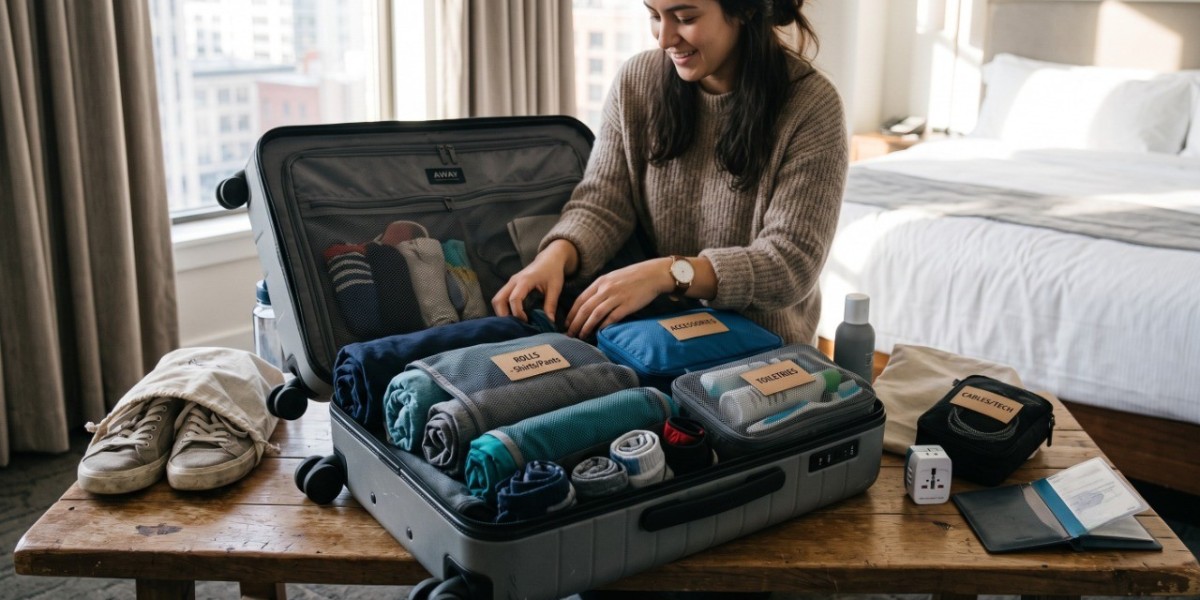
Roll Your Clothes Instead of Folding
Rolling clothing remains one of the most popular packing methods for good reason.
Benefits include:
- Saves space
- Reduces wrinkles
- Makes clothes easier to locate
- Creates room for additional items
T-shirts, jeans, shorts, workout clothes, pajamas, and casual dresses roll particularly well.
However, formal wear such as suits, blazers, and dress shirts usually benefits from careful folding.
Use Packing Cubes
Packing cubes have become one of the most recommended travel accessories in recent years.
Instead of mixing everything together, divide your belongings into categories.
For example:
- Cube 1: Shirts
- Cube 2: Pants
- Cube 3: Underwear
- Cube 4: Electronics
- Cube 5: Toiletries
Packing cubes keep your suitcase organized throughout your trip. They also make unpacking much easier since you can place each cube directly into hotel drawers.
Pack in Layers
Experienced movers often recommend packing heavy items first.
A simple layering system looks like this:
- Shoes at the bottom
- Heavy clothing
- Rolled casual clothing
- Folded delicate garments
- Toiletries
- Electronics
- Travel documents in an accessible pocket
This arrangement keeps your suitcase balanced while protecting delicate belongings.
Make Use of Every Empty Space
Every small space inside your luggage has value.
Consider placing:
- Socks inside shoes
- Belts around the suitcase edges
- Chargers inside small pouches
- Jewelry in protective travel cases
- Small accessories between clothing rolls
These small adjustments can create surprisingly large amounts of extra space without making your suitcase feel overcrowded.
Essential Packing Checklist for Every Trip
No matter where you're headed, creating a checklist before you pack can make all the difference. Travelers often forget small but important items when they rush. By planning ahead, you'll reduce stress and avoid unnecessary shopping after you arrive.
The team at My Good Movers recommends laying everything out on your bed or a large table before placing it in your suitcase. This simple step helps you see what you're bringing and remove anything you don't actually need.
Clothing Essentials
Pack clothing based on the length of your trip, expected weather, and planned activities.
A basic clothing checklist includes:
- Comfortable shirts or tops
- Pants or jeans
- Shorts (if appropriate)
- Underwear
- Socks
- Sleepwear
- Jacket or hoodie
- Comfortable walking shoes
- Sandals or dress shoes
- Belt
- Hat or cap
Choose versatile clothing that can be mixed and matched. Neutral colors allow you to create several outfits without packing your entire wardrobe.
Toiletries
Keep toiletries in a leak-proof travel bag to protect your clothes.
Don't forget:
- Toothbrush
- Toothpaste
- Shampoo
- Conditioner
- Soap or body wash
- Deodorant
- Razor
- Hairbrush
- Sunscreen
- Moisturizer
- Lip balm
- Prescription medication
Remember airline liquid restrictions if you're traveling with only a carry-on bag.
Electronics
Technology has become a travel necessity.
Pack:
- Phone
- Charger
- Power bank
- Laptop (if needed)
- Tablet
- Camera
- Charging cables
- Travel adapter
- Earbuds or headphones
Store electronic accessories together in a dedicated organizer to prevent tangled cords.
Important Documents
Never bury important documents at the bottom of your suitcase.
Keep these items easily accessible:
- Passport
- Driver's license
- Boarding passes
- Hotel reservations
- Travel insurance documents
- Credit cards
- Emergency contact information
Many travelers also keep digital copies stored securely in cloud storage as a backup.
Packing Tips for Different Types of Travel
Not every trip requires the same packing strategy. Business travel differs greatly from a beach vacation, while family travel has its own unique challenges.
Business Travel
Business travelers should prioritize wrinkle-free clothing and easy access to work essentials.
Pack:
- Business attire
- Dress shoes
- Laptop
- Chargers
- Notebook
- Business cards
- Travel-size garment steamer if needed
Consider using a garment folder for suits and dress shirts to minimize wrinkles.
Family Vacations
Packing for a family requires additional planning.
Helpful tips include:
- Assign one packing cube per family member.
- Pack snacks for travel days.
- Bring extra clothing for children.
- Carry entertainment for long journeys.
- Label children's luggage.
Keeping everyone's belongings organized makes hotel check-ins and unpacking much smoother.
Beach Holidays
Beach trips require lightweight clothing and sun protection.
Remember to pack:
- Swimsuits
- Flip-flops
- Beach towel
- Sunglasses
- Sunscreen
- Reusable water bottle
- Cover-up
- Waterproof phone pouch
A separate waterproof bag is useful for storing wet swimsuits before returning home.
Winter Travel
Cold-weather destinations require bulkier clothing, so space-saving techniques become even more important.
Roll thermal clothing tightly and wear your heaviest coat and boots while traveling to save valuable suitcase space.
Pack items like:
- Thermal base layers
- Winter coat
- Gloves
- Scarf
- Wool socks
- Snow boots
- Beanie
Compression packing cubes can be especially helpful for winter clothing.
Common Packing Mistakes to Avoid
Even experienced travelers occasionally make packing mistakes. Fortunately, most of them are easy to avoid.
Packing Too Many Clothes
One of the biggest mistakes is packing for "just in case."
Ask yourself:
- Will I really wear this?
- Can this item match multiple outfits?
- Can I wash clothes during my trip?
If the answer is no, leave it behind.
Ignoring Airline Weight Limits
Overweight luggage can lead to expensive baggage fees.
Before leaving home:
- Weigh your suitcase.
- Leave room for souvenirs.
- Review your airline's baggage policy.
A portable luggage scale is an inexpensive investment that can save money.
Not Protecting Fragile Items
Electronics, souvenirs, and glass items should always be protected.
Wrap fragile belongings in:
- Soft clothing
- Bubble wrap
- Packing paper
- Protective travel cases
Place them near the center of your suitcase where they'll receive the most cushioning.
Forgetting a Laundry Bag
A lightweight laundry bag helps separate clean clothes from dirty ones throughout your trip.
This simple addition also makes unpacking easier once you return home.
Packing Liquids Incorrectly
Loose bottles can leak and ruin an entire suitcase.
Always:
- Tighten bottle caps.
- Place liquids in sealed plastic bags.
- Use travel-sized containers.
- Keep liquids upright whenever possible.
Smart Space-Saving Tricks Used by Professional Movers
Professional movers know that efficient packing is about more than fitting everything inside a suitcase—it's about protecting your belongings while making the best use of every inch.
Here are a few expert tricks:
| Space-Saving Trick | Benefit |
|---|---|
| Roll soft clothing | Saves space and reduces wrinkles |
| Fill shoes with socks | Uses otherwise wasted space |
| Wear bulky items while traveling | Reduces suitcase weight |
| Use compression cubes | Creates extra packing room |
| Keep heavy items near wheels | Improves balance |
| Pack by outfit | Makes dressing easier |
| Leave 10–15% empty space | Allows room for souvenirs |
Another helpful strategy is to place frequently used items near the top of your suitcase. You'll avoid unpacking everything just to find a phone charger or a clean shirt.
Many seasoned travelers also prepare a small essentials pouch containing medications, travel documents, chargers, and toiletries. If your checked luggage is delayed, you'll still have your most important items close at hand.
With these professional techniques, how to pack a suitcase becomes much less intimidating. Instead of struggling to close an overfilled bag, you'll travel with confidence knowing everything is organized, protected, and easy to access.
Frequently Asked Questions (FAQs)
1. What is the best method for packing a suitcase?
The best method is to combine several proven techniques. Roll casual clothing to save space, fold delicate garments to prevent wrinkles, use packing cubes for organization, and place heavier items near the wheels of your suitcase. This approach keeps your luggage balanced, organized, and easy to unpack. The experts at My Good Movers recommend planning your packing in advance to avoid overpacking and to make travel more enjoyable.
2. Is rolling clothes better than folding them?
It depends on the type of clothing. Rolling works exceptionally well for T-shirts, jeans, shorts, activewear, and casual dresses because it minimizes wrinkles and maximizes space. Folding is usually better for formal clothing, dress shirts, blazers, and delicate fabrics that could become creased if rolled.
3. Are packing cubes worth buying?
Yes. Packing cubes help separate your belongings into categories, making it easier to find what you need without disrupting the rest of your suitcase. They also help compress clothing slightly, improve organization, and simplify unpacking at your destination.
4. How can I fit more items into a carry-on suitcase?
To maximize space in a carry-on, choose versatile clothing that can be worn in multiple combinations. Roll your clothes, use compression packing cubes, fill shoes with socks or accessories, wear bulky items during travel, and avoid packing unnecessary "just in case" items.
5. How do I keep my clothes from wrinkling?
Wrinkle prevention starts with careful packing. Fold dress clothes neatly, use garment folders for formal attire, avoid overstuffing your suitcase, and place delicate items on top. Unpacking your clothes as soon as you arrive can also help reduce wrinkles naturally.
6. What should always stay in my carry-on bag?
Keep valuable and essential items with you during travel. Your carry-on should include:
- Passport and travel documents
- Wallet and identification
- Prescription medications
- Phone and chargers
- Laptop or tablet
- A change of clothes
- Toiletries that meet airline regulations
- Snacks and a reusable water bottle
- Important electronics
Keeping these essentials nearby ensures you're prepared even if your checked luggage is delayed.
Conclusion
Packing doesn't have to be stressful. With the right strategy, you can transform a frustrating chore into a simple, organized process that sets the tone for an enjoyable trip.
Whether you're traveling for business, a family vacation, or an international adventure, using proven packing techniques helps protect your belongings, save valuable space, and reduce unnecessary stress.
Learning how to pack a suitcase efficiently starts with selecting the right luggage, creating a checklist, and using practical methods such as rolling clothes, packing cubes, and strategic layering.
These simple habits make it easier to stay organized throughout your journey while minimizing wrinkles and maximizing every inch of available space.